
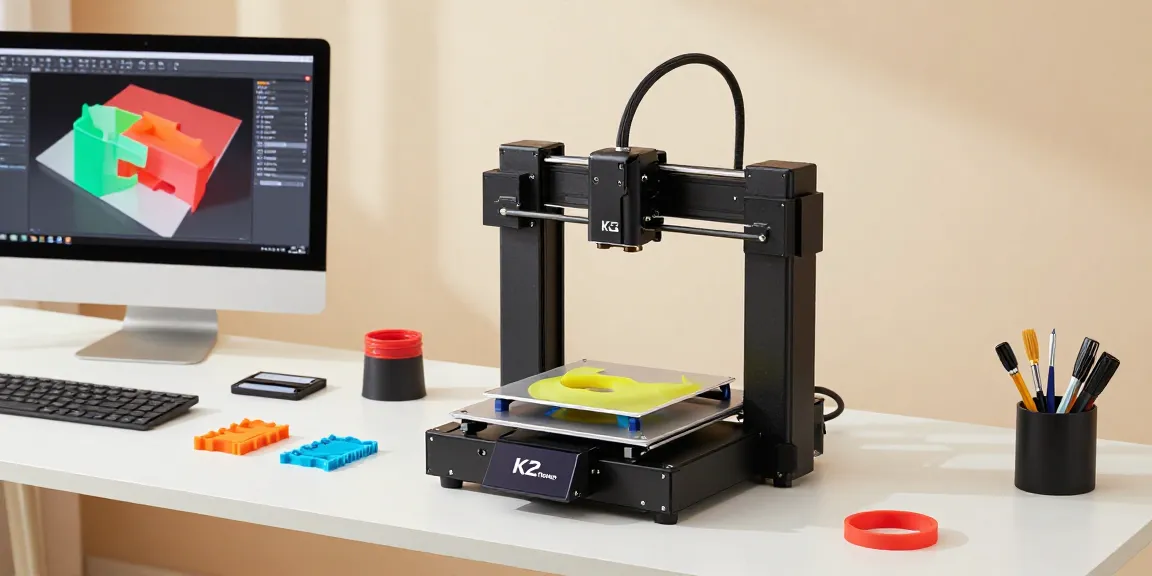
Understanding the Best Value 3D Printer Market
The 3D printing market has experienced remarkable evolution, shifting from niche applications to a mainstream technology utilized in various industries, including manufacturing, healthcare, and education. With advancements in materials and design, consumers now have access to affordable options without compromising on quality. Crucially, understanding the Best value 3D printer offerings is essential for anyone looking to explore this dynamic space. The goal is to recognize not only leading models but also features that enhance user experience and value.
Historical Trends in 3D Printing Technologies
Historically, 3D printing technology dates back to the 1980s, but it wasn’t until the advent of affordable consumer models in the early 2010s that it gained traction among hobbyists and SMEs (small to medium enterprises). The primary technologies—Fused Deposition Modeling (FDM) and Stereolithography (SLA)—have seen enhancements in speed, fidelity, and material choice. Over the past decade, increased competition has driven prices down while improving quality, leading to commercially viable 3D printers that cater to those seeking the best value without sacrificing performance.
Current Top Models in 2026
The landscape of 3D printers in 2026 features several standout models that epitomize performance and affordability. Brands like Creality, Prusa, and Anycubic have released flagship products which offer vibrant community support and regular firmware updates. Notable mentions include the Creality K2 Plus, which brings innovation to home and professional printing solutions, showcasing a seamless amalgamation of user-friendliness and advanced features.
Evaluating Cost vs. Performance in 3D Printers
When assessing 3D printers, understanding the delicate balance between cost and performance is pivotal. A printer that is cheaper upfront may incur higher costs due to increased material wastage, longer print times, or lack of support for advanced features. Therefore, evaluating performance metrics—resolution, print speed, and materials compatibility—against price is essential in determining the best value for your investment.
Innovative Features of the K2 Plus Combo 3D Printer
The Creality K2 Plus Combo stands out in its class with a plethora of innovative features designed to redefine user experiences. The build platform is engineered for stability, ensuring minimal warping and enhanced adhesion for cleaner prints. With its dual extrusion capability, users can experiment with various filament types, catering to diverse project demands. In this concept, the K2 Plus integrates technologies that showcase why it’s a top contender among consumers looking for the best value 3D printer.
Cutting-Edge Print Quality and Speed Analysis
Print quality and speed are often the primary considerations for users exploring 3D printers. The K2 Plus Combo utilizes advanced motion systems that allow for rapid and accurate quiescent performance. Tests reveal that this printer can maintain high resolution at print speeds exceeding 150mm/s, significantly reducing production time while enhancing accuracy. These features showcase its ability to serve both hobbyists and professional users who wish to iterate designs quickly.
Advanced Filament Compatibility and Print Materials
The K2 Plus Combo supports a wide range of filament types—PLA, ABS, PETG, and TPU—making it versatile for different applications. This printer also embraces CFS (Carbon Fiber Silicone) compatibility, an innovation that appeals to users seeking to print with composite materials for rugged applications. This adaptability enables users to explore their creativity without facing limitations typical in other low-cost printers.
User-Friendly Software and Interface Design
Operating the K2 Plus Combo is straightforward, owing to an intuitive interface that guides both novices and experienced users. Enhanced by the inclusion of open-source software options, like Cura and PrusaSlicer, users have customizability for advanced settings without extensive technical knowledge. The seamless process from slicing models to monitoring prints via connected devices exemplifies how modern 3D printers can appeal to a broad audience.
Cloud Integration for Enhanced 3D Printing Workflows
In today’s fast-paced environment, cloud technologies are integral for streamlining workflows in 3D printing. The K2 Plus Combo offers features that enable users to connect to cloud services for file storage and printing management. By leveraging cloud integrations, users can access their designs from any device and monitor prints remotely, increasing collaboration and efficiency across teams.
Benefits of Utilizing Cloud Services in 3D Printing
Cloud services offer numerous benefits, particularly in terms of scalability and remote accessibility. Users can easily upload and access their models and manage print jobs from different locations, allowing for flexibility that traditional desktop applications cannot match. In addition, cloud solutions often provide collaboration tools that facilitate teams working on shared projects without physical proximity.
Best Cloud Platforms for 3D Printing Management
Several platforms have emerged as leaders in 3D printing management, including Tinkercad and Autodesk Fusion 360. These platforms not only provide design assistance but also integrate seamlessly with printers like the K2 Plus Combo, creating an end-to-end solution that simplifies the workflow of designers. Furthermore, they boast simulators that assist users in pre-print checks, minimizing errors before they occur.
Future of Cloud-Based 3D Printing Solutions
The trajectory of cloud-based solutions in 3D printing points towards increased integration with artificial intelligence and machine learning. Such technologies promise to analyze user behavior and improve workflows tailored to specific needs. As 3D printing moves further into cloud ecosystems, the potential for real-time analytics and data-driven optimization is truly promising for professionals and hobbyists alike.
AI-Powered Features in Modern 3D Printers
Artificial intelligence introduces a new dimension to 3D printing, facilitating better accuracy and efficiency. The K2 Plus Combo leverages AI-driven algorithms to enhance various aspects of printing, from design validation to print monitoring. By employing AI capabilities, users can unlock unprecedented levels of precision in their creations.
Implementing AI Algorithms for Improved Print Accuracy
AI algorithms play a significant role in predicting and correcting print errors. For instance, machine learning models can analyze past prints to identify patterns or common issues, allowing real-time adjustments to maintain quality. By integrating AI, 3D printers enhance user confidence, particularly for complex designs requiring high fidelity.
Data-Driven Performance Optimization Strategies
To maximize printer performance, data analytics can be employed to understand how different configurations impact results. Users can exploit performance metrics across multiple dimensions, including filament type, temperature variations, and slicing settings, enabling them to identify the optimal conditions for their specific applications.
Predictive Maintenance for 3D Printing Devices
Predictive maintenance powered by AI techniques can help mitigate unexpected downtimes. By employing sensors that feed data into AI systems, printers can preemptively alert users about required maintenance or replacements, thereby extending the longevity of devices and ensuring consistent performance for crucial projects.
Cybersecurity Considerations for 3D Printing Systems
As 3D printing technology becomes more pervasive, ensuring cybersecurity within these systems has become paramount. Intellectual property theft and design leaks can have severe implications for businesses, making it vital for users to adopt robust cybersecurity protocols while operating 3D printers like the K2 Plus Combo.
Safeguarding Designs and Intellectual Property
Encrypting design files and employing secure access controls are two core strategies. Organizations must maintain rigorous practices to prevent unauthorized access. Moreover, employing project management software that incorporates version control can help track changes and securely manage files from inception to final production.
Establishing Secure Network Protocols for 3D Printers
3D printers connected to networks should be safeguarded with secure protocols such as VPNs or secure Wi-Fi connections to protect against external threats. Regular firmware updates bolster security against vulnerabilities; thus, maintaining awareness of manufacturer releases is crucial for long-term security.
Responding to Cyber Threats in 3D Printing
It is vital to have a response plan in place to mitigate the effects of any potential breaches. Organizations should employ monitoring tools capable of detecting unusual activity and ensuring that proper incident response mechanisms are enacted promptly. Continuous awareness training for users on emerging threats can further bolster overall security.
FAQs
What is the best value 3D printer for beginners?
For beginners, the Creality K2 Plus is often recommended due to its user-friendly features, extensive community support, and compatibility with various materials, making it an excellent gateway into the world of 3D printing.
How can I maintain my 3D printer for optimal performance?
Regular maintenance such as cleaning the nozzle, lubricating moving parts, and calibrating the bed can significantly extend the life of your printer and maintain optimal performance over time.
Are there subscription models for 3D printing materials?
Indeed, several providers offer subscription services that deliver various filaments and accessories directly to your door, which can be convenient and cost-effective for frequent users.